Saturday, February 26, 2011

R. C. Sproul--Acts: You Will Be My Witnesses


Today, I finished reading Acts:  You Will Be My Witnesses to the End of the Earth by R. C. Sproul.  I started this book in the last days of December and used it for morning devotional reading.  With 62 chapters, it provided a good two month spiritual diet.  This book is a commentary and as such includes exegetical and theological points, but it grew out of sermons that Dr. Sproul preached at St. Andrew's Church in Florida.  This book contains rich illustrations and anecdotes that bring out the text of Acts.  If someone is seeking an in-depth study of Acts, this book would not be the best.  But for a good morning Bible study (with coffee freshly brewed), this book with chapters of about 5 to 7 pages each, is perfect.  I look forward to reading more books in this commentary series by Dr. Sproul. Acts is published by Crossway.

Last month, I mentioned this book and other Crossway titles and noted that I did not know how many R.C. Sproul books I had read over the course of several decades.  I have read quite a few, but not near all that this prolific Calvinist popularizer has written.  Dr. Sproul has not been immune to the controversies that have divided Reformed Christians, but he has been able to keep the focus of his books and Ligonier Ministries on the greater emphases of Reformed Theology and not get sidetracked by controversies.

Everytime I read one of his books or listen to or watch one of his many video talks, I feel like I have returned home to the best of Reformed traditions--good Bible teaching and preaching.

Other Favorite Sproul Books:


1.  The Holiness of God.  This is a great book that I need to read again soon.  It has been described as a modern Christian classic. Amen to that.  The video messages of this series are also great.  The Sproul videos are usually about 30 minutes long and are great for home Bible studies or Sunday school classes.

2.  Chosen by God.  A great introduction to the Sovereignty of God in salvation.  An inviting Biblical look at the doctrines of election and predestination.

3.  Knowing Scripture.  Great and instructive study tool.  I have used it in classes.

4.  Five Things Every Christian Should Know.  And five things every Christian should be reminded of.

5.  Thy Brother's Keeper (originally titled Johnny Come Home).  This is a somewhat autobiographical novel about conversion.

6.  Essential Truths of the Christian Faith.  Simple explanations of theological terms and concepts.

7.  Surprised by Suffering.  Deals with the problem of evil.

8.  Lifeviews.  This is a worldview study of the different ideas that have gripped the modern world.

9.  The Consequences of Ideas.  This book is a simple and useful introduction to the history of philosophy and philosophers.  This would be a good book for Christian high school students or homeschool students.

10. The Reformation Study Bible – ESV .  Dr. Sproul was the general editor of this study Bible.  The theological notes and chapter introductions are from a specifically Reformed perspective.  I am always impressed that Sproul spoke against study Bibles with notes in Knowing Scripture, yet changed his view in time.

I have another six to ten Sproul books I need to read, especially his book on abortion which has been reprinted some twenty years after it first appeared.  It is titled Abortion – A Rational Look at An Emotional Issue.  And there are another dozen or so Sproul books I would love to acquire.

Thank God for the continuing labors of this great man of God.

Wednesday, February 23, 2011

Hard Times Found In Good Books

I have recurring longings for a life in simpler times, for a closer attachment to the soil, for a better time, for a more Southern lifestyle. This longing grows partly out of a frustration with a world where everyone has a telephone attached to their ear every waking moment, and if not attached to their ears, they are fiddling away with it, texting some person while trying to appear interested in my more boring live, non-technological presence.


When we gather as a family to watch our favorite show, “The Waltons,” I find myself thinking that I want to be the Waltons. I want to own a mountain, have a big front porch, be surrounded by woods, fields, and hills, and live in a small, simple community. All this is nostalgia. It has a grounding in truth, for our times are quite irritating. I even miss the 1980s, for I wish that Ronald Reagan were overseeing our current economic tidal wave of disasters.

Most idyllic times and places are better enjoyed through sentimental stories and fanciful movies. Most “good old days” were not all that good.

A couple of recent readings have reminded me of the difficulties of living in other times and places. These readings have confirmed that living in the second decade of this century is better than the early decades of the last century. And having too much grass to mow in the summer is better than depending upon a good wheat crop to survive the winter.


Bound Like Grass: A Memoir from the Western High Plains by Ruth McLaughlin was published in 2010 by Oklahoma University Press. Mrs. McLaughlin grew up in the 1950s and 60s in the eastern part of Montana on a wheat and cattle farm. Her family had been working the fields for several generations. One might associate this rural western life with the wholesomeness of farm living, the rugged individualistic values of the frontier, and an abiding sense of the power and beauty of the land. No doubt eastern Montana had advantages over the crowded slums and ghettos of other portions of the world.

But such farm living was a hard living. The Alexander family (Mrs. McLaughlin’s maiden name was Alexander) was poor, although not destitute. Much of the food was mundane, the clothes cheap and used, and the niceties of life rare. The family knew well what it was like to scrounge through the local dump to find usable items or magazines.

The western high plains yields its produce stingily, and then only after the hardest labor. The life there was lonely and empty. The Alexander family had two normal children and two that had special needs. Because of the times and location of their lives, the parents knew little of how to care for their afflicted children.

In various ways, the hardships of the Alexander family translated into emotional pains and reactions. This book is not a bitter, angry story, but it is filled with sadness and a sense of longing to have had something a bit better.

I have no desire to have to live on a farm in the plains. “Little House on the Prairie” was great viewing on television years ago, but the realities were far from attractive.


More recently, I have been reading Rick Bragg’s The Most They Ever Had. This book is about Southern folks who moved to the towns to work in textile mills. I might wonder why such people ever left their mountain homes, but the lives there were likely worse than even living on the western high plains. In the mill towns, the people worked incredibly hard jobs in extremely awful conditions for very long hours. The pay and the benefits were not great, but there was pay and there were benefits, such as having a house.

Bragg’s story is one close to his heart and upbringing. He writes with poetry and power of the quiet strength of the mill workers. They were often “done wrong” by the factory owners and bosses. Many experienced the horrors of lost limbs in the machinery and lungs damaged by the ever-present lint and dust from the cotton. But milling the cotton seemed to beat the even harder task of picking it. When economic conditions moved the textile industries to other countries, these poor people were devastated.

This book is a testimony to the resilience and faith of many Southern folks. They were not refined, cultured people. Most were not educated at even the most basic levels. Yet their stories put all my refinement, culture, and education to shame.

Rick Bragg might very well be the best Southern writer of our time.

Tuesday, February 15, 2011

Bonhoeffer: The Biography and the Truth

Last summer and fall, I kept a book at my bedstand for evening reading.  It was Bonhoeffer: Pastor, Martyr, Prophet, Spy by Eric Metaxas.  I had read a short biography of Bonhoeffer some years before and have repeatedly read two of his best known books,  The Cost of Discipleship and Common Life.  Bonhoeffer's life is filled with elements of great courage and daring.  He was involved with other conspirators in the unsuccessful plot to kill Adolph Hitler.  For his part in the resistance and the plot, he was hanged just days before the entire wicked Third Reich came to an end.


There are many fascinating elements in Bonhoeffer's life.  The evidence and case against him were sketchy, so there was always the possibility of his being released. Had he survived a week or two longer, the Allies would have liberated him.  His very presence in Germany was a choice he made, for before the war, he was in the United States, but felt that he was obligated to stand alongside fellow Germans during the years of the Hitler regime.  And he was engaged to be married. His fiance was an attractive girl, much younger than he was.

His story is one worthy of reading.  Add to that, the two books mentioned above have been inspiring and helpful books to many Christians.  So this new biography was a welcome addition to my library and to my reading for the year.

But there is one major problem with the book.  It is a problem that is often recurring in the Christian community.  Bonhoeffer was brave, brilliant, and at many points, heroic and admirable.  His theology was suspect, however.  The Third Reich of Adolph Hitler is part of a complicated web of German theological, political, social, cultural, and philosophical thought.  While there were good and godly Germans, the country as a whole had squandered its theological heritage and had bought into wicked and perverse philosophies.  Bonhoeffer was certainly a better man than many of his contemporaries, but he was far from being sound in his theology. 

It wasn't just that Bonhoeffer edged slightly off the straight and narrow highway of orthodoxy. Bonhoeffer left the road completely.  One can praise some of his writings, but it is hard to have any confidence in his overall life and faith. 

Sad to say, the Metaxas biography portrays Bonhoeffer as though he were an American Bible-believing evangelical.  The deviations in orthodoxy, the associations with the Higher Critical theologians, and the radical departures from historic Christianity are either overlooked or completely misunderstood.

One of the boldest Christian scholars in our age has exposed the Bonhoeffer myth.  Dr. Richard Weikart is a professor of history at California State University.  He teaches modern European history.  Several years back, he wrote a book about how evangelicals misunderstood Bonhoeffer.  The recent biography by Metaxas has resulted in Dr. Weikart's renewed labors at dealing with the on-going misunderstanding.  Dr. Weikart has an in-depth and thoughtful book review of the new biography, and he is working on a revised full length book.  


Quite frankly, I felt embarrassed after I read Dr. Weikart's work.  I had read the Bonhoeffer biography in an unthinking manner and with all my presuppositions let down.  I really did not want to read what Dr. Weikart had written because I did not want to confront facts contrary to a beloved biography.  But Christian scholarship can never be about shading the facts, altering the interpretations, and rewriting the evidence in order to support false views.  We endure too much of that from the global warming crowd (and this winter we have been saturated with frozen global warming flakes in our area), from the political Leftists, and from evolutionists.

I thank God for Bonhoeffer's earlier writings, although I will read them next time with a bit more discernment. I honor him for his opposition to the Third Reich.  I hope he confessed his sins and repented of his theological heresies before his death.  And I hope he found grace in the sight of God.  But I cannot esteem him in the same manner as true martyrs of the World War II era.


I am also thankful for Dr. Richard Weikart's willingness to criticize a popular figure in the evangelical community.  Dr. Weikart and I share a great appreciation for Francis Schaeffer and his monumental book How Should We Then Live? 
[Richard Weikart's philosophy of life and appreciation for Francis Schaeffer: tp://www.meettheprof.com/rweikart]

 I first discovered Dr. Weikart's work several years back when I read
From Darwin to Hitler: Evolutionary Ethics, Eugenics, and Racism in Germany.  I wrote a review of that book which was posted and published here and there.  I later expanded the review and included it in my book, Punic Wars and Culture Wars.  As I stated in the review, this subject is not enjoyable reading, but it is vital that Christians and others see the consequences of the Darwinian worldview.


Dr. Weikart's more recent book is Hitler's Ethic: The Nazi Pursuit of Evolutionary Progress.  It, too, promises to be more grim, but necessary reading for Christian thinking.  As you might imagine, a glance at the reviews on Amazon and elsewhere shows incredible hostility to Dr. Weikart's writings from people supporting evolution.


Wednesday, February 09, 2011

The Feud between Jane Austen and Robert Louis Stevenson

It is not a feud amonst the British literatery figures from the past. Rather, it is the a feud going on in my own mind and with my own ever growing, tilting book stack.  I started reading Robert Louis Stevenson's Kidnapped last week.  Then we began Jane Austen's Pride and Prejudice in Humanities class this week.  Both books are demanding my attention.  Both books, like the sirens of The Odyssey, are hard to resist. Both are classics and adventures and romances. 


"The person, whether it be a gentleman or a lady, who has not pleasure in a good novel,
must be intolerably stupid"
Jane Austen, Northanger Abbey


"This is no furniture for the scholar's library, but a book for the winter evening schoolroom when the tasks are over and the hour for bed draws near; and honest Alan, who was a grim old fire-eater in his day, has in his new avatar no more desperate purpose than to steal some young gentleman's attention from his Ovid, carry him awhile into the Highlands and the last century, and pack him to bed with some engaging images to mingle with his dreams."
Robert Louis Stevenson, Dedication Page to Kidnapped

Monday, February 07, 2011

Reagan Centennial: Great Reagan Quotes

“ We welcome change and openness; for we believe that freedom and security go together, that the advance of human liberty can only strengthen the cause of world peace. There is one sign the Soviets can make that would be unmistakable, that would advance dramatically the cause of freedom and peace. General Secretary Gorbachev, if you seek peace, if you seek prosperity for the Soviet Union and eastern Europe, if you seek liberalization, come here to this gate. Mr. Gorbachev, open this gate. Mr. Gorbachev, Mr. Gorbachev, tear down this wall!”

Later on in his speech, President Reagan said, "As I looked out a moment ago from the Reichstag, that embodiment of German unity, I noticed words crudely spray-painted upon the wall, perhaps by a young Berliner, 'This wall will fall. Beliefs become reality.' Yes, across Europe, this wall will fall. For it cannot withstand faith; it cannot withstand truth. The wall cannot withstand freedom."

File:ReaganBerlinWall.jpg

A people free to choose will always choose peace.

Above all, we must realize that no arsenal, or no weapon in the arsenals of the world, is so formidable as the will and moral courage of free men and women. It is a weapon our adversaries in today's world do not have.

All great change in America begins at the dinner table.

Before I refuse to take your questions, I have an opening statement.

But there are advantages to being elected President. The day after I was elected, I had my high school grades classified Top Secret.

Concentrated power has always been the enemy of liberty.

Democracy is worth dying for, because it's the most deeply honorable form of government ever devised by man.

Entrepreneurs and their small enterprises are responsible for almost all the economic growth in the United States.

Facts are stubborn things.

Freedom is never more than one generation away from extinction. We didn't pass it to our children in the bloodstream. It must be fought for, protected, and handed on for them to do the same.

Freedom prospers when religion is vibrant and the rule of law under God is acknowledged.

Government always finds a need for whatever money it gets.

Government does not solve problems; it subsidizes them.

Government exists to protect us from each other. Where government has gone beyond its limits is in deciding to protect us from ourselves.

Friday, February 04, 2011

Reagan Books: Taking Tenventory, Plus One

This Sunday, January 6, 2011 will mark the 100th anniversary of the birth of Ronald Reagan. I first saw Reagan live back in 1976 when he was running for the Republican nomination against the moderate Republican President Gerald Ford. Reagan came to the Texarkana airport to speak while campaigning in the Texas primary. (A friend of his named Jimmy Stewart was also there.) Reagan swept the Texas primary and almost won the nomination from Ford in 1976. Instead, Jimmy Carter was elected President, and he spent four year preparing the nation for the Reagan Revolution.

It is hard to believe that President Reagan would be 100. His optimistic spirit gave him a youthfulness and vitality that translated into the American spirit. His listless opponent in 1984, Walter Mondull, even commented in their debates that Reagan had restored American optimism.

When we look at that time in our history (the 1970s and 1980s), we see three men (and no doubt others as well) who personified in their lives and writings a vision for changing this country. Francis Schaeffer, whose 99th anniversary of his birth was last Sunday, energized the evangelical community with a vision of how we should then live. William F. Buckley, late editor of National Review, gave the conservative movement intellectual energy and calm resolution in the rightness (in both senses of the word) of the conservative and American cause.  And Reagan brought about a revolution in the political structure of the nation and a resolution to the Cold War.  And, you simply must study and think about changes in culture to realize that these kinds of things don't completely change overnight.  These culture changes are visions, not legislative enactments.

Not only is the current political world of Washington awash in incompetence, but the answers, the counter-points, to the political and cultural messes are weak, to say the least.  Pair these two sets of names together:
Reagan-Buckley-Schaeffer and Palin-Beck-Warren.  I'll grant that I appreciate many things that Sarah Palin says and probably agree with Glenn Beck and Rick Warren at points.  But we need some gravitas, and we need it soon.

Below are some of my picks for great books about and, in some cases, by Ronald Reagan. 


This is the story of the 1980 campaign.  Ronald Reagan almost missed the Republican nomination and the Presidency many times.  There is a real drama to this powerful and exciting story of his victories over many obstacles from both political parties. 

Reagan's Revolution is the prequel to the book above. This account tells of Reagan's failed efforts in 1976 to win the Republican nomination.  The party establishment always prefers a Taft, a Rockefeller, a Bush, a Dole, a McCain, and, in the future, a Romney, to a real conservative.  Establishment thinking is "better to lose with a moderate than win with a conservative."


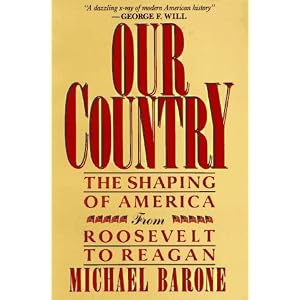
This study is a useful political and historical survey to the various transformations in our nation and culture leading up to the Reagan administrations.


This was the first book I read about Reagan after the Reagan years. It was during the Clinton years that people began realizing how much good Reagan had done. This is a fine study by a good conservative thinker.


Peggy Noonan is a powerful writer.  She worked for Reagan as a speechwriter. As seen in the title of this book, Ronald Reagan's life and Presidency was centered on character.  This book came out during the Clinton debacle when character was dethroned.

Michael Deaver was a major player in Reagan's political career.  This is a great first hand story of a man who was at Reagan's side during his campaigns and Presidency.


This is a great book.  Critics (meaning virtually all of the then-established media and many Democrats) mocked Reagan's view of the Cold War.  His strategy was simple:  We Win, They Lose.  When Reagan was first told of plans to evacuate the President in case of an attack, he countered by saying he was staying in the White House.  That same defiant spirit carried the day.  The Soviet Union blinked and blinked again and crumbled.  Where is the Reagan vision in our current war against Islamo-terrorism?


Thankfully, Reagan's autobiography has been republished in honor of the centennial of his birth.  Even President Obama carried a copy of it to read while on one of his many vacations.  Don't expect much from that.

Ronald Reagan was continually mocked and ridiculed as a light-weight.  His diaries reveal a careful and wise thinker.  Reagan was never overly concerned about answering his critics. He just did what he thought he needed to do.  His first-hand accounts reveal the wisdom of the man.


Those who accused Reagan of being "just an actor" often described him as being talented at reading scripts that others prepared for him.  As the Reagan writings began to be published, we found out that this was one of the most diligent of writers, revisors, and stylists.

This beautiful collection of letters shows Reagan's deep affection for his wife. He even scribbled love notes while sitting through long, laborious White House meetings.  Nancy Reagan endured more than her share of venom and riducule from the public. While having neither the depths of conservative convictions or religious convictions of her husband, she was and continues to be a faithful wife and defender of her husband's legacy.

Thursday, February 03, 2011

Biographies I'm Reading or Recently Finished

Thomas Carlyle said, "Biography is the only true history."  I would debate that point, but would not completely disagree with it.  Biographies are among the most fascinating of stories. Biographies inspire; biographies instruct; biographies show possibilities; biographies break your heart. Quite often, if the biography is of a good or great man, you find yourself wishing you could have known the subject.

My love of biographies has led to a biography blitz in my evening readings.  I have had too many books going.  I pick up one and read several pages, then go to another, and then another.

Colonel Roosevelt is the third volume in Edmund Morris's great trilogy on Theodore Roosevelt.  I read the first volume (The Rise of Theodore Roosevelt) in the summer before I began teaching school (c. 1979).  The second volume (Theodore Rex) was long delayed by Morris's failed biography of President Reagan, but I read it around 2000 shortly after it came out. This volume deals with the years after Roosevelt left office. During that time, he killed millions of animals in Africa on a year long safari, and then he toured Europe and met many key political leaders.  But as his dissatisfaction with the Taft Administration grew, he returned to the United States, tried and failed to take the Republican nomination away from Taft in 1912, and then ran for the President as an independent candidate in the party nicknamed the Bull Moose Party.  Roosevelt's run for the Presidency allowed the first of the delusional twentieth century liberals, Woodrow Wilson, to capture the White House.  Even accounting for TR's political views, a third term for this Roosevelt would have possibly helped prevent or would have lessened World War I and would have saved the U.S. from later electing TR's distant cousin to the White House.  Great book so far.


I simply must get busy reading this book Defending Constantine by the prolific and wide-ranging Christian thinker, Peter J. Leithart.  Constantine is one of the most commonly misunderstood, misrepresented, and misconstructed leaders in history.  Just try asking Christian friends to give thanks for Constantine.

Constantine may be controversial, but Herman Bavinck's reputation as a great Christian thinker and theologian is quite beyond debate.  Often biographies of thinkers are hard to read, but this book is an inspiring and enjoyable book. Much of the delight comes from the picture it shows of Dutch Calvinism in the time of Kuyper, Groen van Prinsterer, and Bavinck.


This autobiography was read purely for fun.  Cash's life was one of troubles, successes, hardships, fame, failures, and astounding achievements. Cash tells of reaching the absolute bottom with his drug problems and his decision to crawl up into a cave in Tennessee so that he could lie there and die.  He thought he was deep enough in the earth and deep enough into his failure and drugs to be far from God.  But God reached him there at that point.  Cash loved the Lord and testified to his faith in songs and words. Yet, he was one to quickly admit his many failures.  Powerful story.


Since I have been covering Oliver Cromwell in class and since I last lectured on Cromwell back when I was in college, I thought I needed to read a good account of Cromwell's life.  This nice looking and illustrated biography of the Lord Protector by Peter Gaunt is a good and short read.