Wednesday, January 25, 2012

Food for the Soul and Mind and Body


So many recipes, so few easy crusts.


Nick picked up Apple Pie: An American Story by John Edge at the local BAM store sometime after Christmas.  He found it on the bargain shelf.  Noticing that Rick Bragg had endorsed the book, I searched in vain for a second copy.  Not having the means of transporting the book back to Wheaton, he left it behind and I consumed it.  I did not put ice cream on top of it, however.  This book was just for fun.  So many great recipes, including recipes for apple pie with red hots and one by Senor Pie that has green chili peppers.  And Marlborough Pie sounded absolutely fantastic.  Yes, I baked a pie last Sunday because of the book.  If only I could muster up the courage and time to take on the issue of crusts. (I opt for the Great Value refrigerator versions.)

We belong to Christ.
Slave: The Hidden Truth About Your Identity in Christ by John MacArthur highlights those many times that Scripture reminds us that we are SLAVES, not just servants or bond-servants, to Jesus Christ.  And, amazingly, that is our Freedom.  Prior to that, we were slaves to sin.

This book is also a powerful defense of the Doctrines of Grace, or what we often refer to as the Five Points of Calvinism.  This is not a TULIP exposition, but the doctrines of total inability and irresistable grace and perseverance of the saints are all ably supported.  What a great blend of theological and exegetical study with devotional encouragement.

Top 100 Non-Fiction Books, Part 4

So many books, so little time.  My life and thought have been altered, improved, jolted, connected so many times by books and authors.  I feel like I have lived a most adventurous life.

Now for more of the non-fiction works that have impacted me.
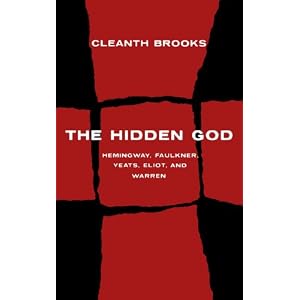
The Hidden God: Studies in Hemingway, Faulkner, Yeats, Eliot, and Warren
Brooks was the best of Faulkner critics.

46. The Hidden God: Hemingway, Faulkner, Yeats, Eliot, and Warren by Cleanth Brooks.
I have acquired quite a few books by literary teacher and critic Cleanth Brooks.  I lament never having him for a teacher or ever meeting him.  My memory fades regarding this book (I did really like it years ago), but I am still amazed by Dr. Brooks' view of literature.


Whether in a fine edition or the cheap, used book club edition, Churchill's history is first rate.
47. History of the English Speaking People by Winston Churchill.
Churchill is the only political leader and historian to win the Nobel Prize for Literature.  This finely crafted history shows why.

48. The History of Warfare by John Keegan.
Keegan is often ranked as the best military historian of our time.  If you want exciting war stories, look elsewhere.  If you want serious analyses of the nature of men and warfare, he is the source.  I have many of his books.

49. The Holiness of God by R. C. Sproul.
Likewise, I have many of the books of R. C. Sproul.  He is a serious theological student and teacher whose voice has mainly been directed toward  writing for the laity.  His books are always encouraging and instructive (and I don't always agree with him).  This may well be his best book.  The video presentation is also really good.

50. How Democracies Perish by Jean Ravel.
It has been too many years since I read this book by the French thinker, Jean Ravel.  The Cold War was still going on when I read it.  Yet I remember being amazed and instructed at the time.  The issues of our time are different, but the vulnerabilities of free governments are always present.


This book reawakened me politically.
51. How Did An Ordinary Man Become An Extraordinary President by Dinest D’Souza
I loved Reagan in 1976 and 1980 and 1984.  By the late 1980s, my more extreme and idealistic conservatism distanced me from the accomplishments of the Reagan Era.  D'Souza worked for President Reagan and shared some of the same disappointments.  But many of us can now reflect upon what Ronald Reagan did do.  He was far from perfect and he was quite ordinary.  Yet he changed the direction of our nation.  It will take a hundred years to right the course (and we are adrift right now), but he started the process.

52. How Should We Then Live? by Francis Schaeffer.
January 30, 2012 marks the 100th birthday of Francis Schaeffer.  This book of his is the crowning achievement of his writing career.  Far from a perfect account of Western Civilization, it is the best introduction to the people, eras, movements, philosophies, and trends of the past 500 to a 1000 years.

53. How to Read Literature Like a Professor by Thomas Foster
This is a fun and rich literary study.  Don't neglect the sequel:  How to Read Novels Like a Professor.  Wish I had read these books back in my college days.  (I might have ended up being a literature professor.)


Read it several times, taught it, reviewed it.
54. How the Irish Saved Civilization by Thomas Cahill
Thomas Cahill has some quirky things to say in all his books and he has some views that are warped.  But he and this book are also filled with many brilliant insights, thoughts, encouragements, and ideas.  This was the first part of his "Hinges of History" series.  I have used this book many times.

55. Idols for Destruction by Herbert Schlossberg
This book is worth its weight in gold simply for the legion of quotes from other people.  It is a powerful collection of thoughts and critiques of almost every modern ideology or "ism" around.  A thoroughly Christian and thought-provoking book.


The stars of brilliance fell on these scholars.
56. I’ll Take My Stand by Twelve Southerners
This book changed my life.  I once thought it was simply a defense of the Confederacy and the Old South.  Now it does contain some Southern apologetics in regard to the War Between the States.  However, the gist of this book is on literature, culture, and community.  Several of the author/contributors have become major influences in my reading, thinking, and writing.  These would include Donald Davidson, John Crowe Ransom, Alan Tate, and Robert Penn Warren.

57. The Impulse to Power by Michael Kelly
I read and liked this study of world history in Christian perspective quite a lot.  I have been negligent in fully utilizing and revisiting this work.


My copy is autographed by the esteemed Dr. Cowan.

58. Invitation to the Classics by Louise Cowan and Os Guinness
One of the high honors of my life was having Dr. Cowan autograph my copy of this book.  I have read from it over and over.  My only criticism is that the book itself and the chapters are too brief.
59. Is Public Education Necessary? by Sam Blumenfeld
I was a public school teacher when I read this mind-changing book.  I changed careers some years back and am in the private school world.  Yep, this was a changer.


60. 1776 and John Adams by David McCullough
David McCullough is a great historian and narrative writer.  Both these books are winners.  I have nearly all of McCullough's books.

Monday, January 16, 2012

Looking Back, A Bit Sadly

My first two books to finish for 2012 have left me feeling a bit nostalgic for a past I never really knew.

The Presidential Election of 1924

The High Tide of American Conservatism: Davis, Coolidge, and the 1924 Election by Garland Tucker III is a wonderful account of what seems like a fairy tale dream:  Going into the ballot box and having to decide between a conservative Republican and a conservative Democrat. 

John Davis, the Democrat nominee for President, was an honorable, decent, and skilled man.  Unfortunately, he was nominated on the 103rd ballot of a hopelessly divided Democrat Party.  Nominees in that party had to get two-thirds of the delegates' support rather than merely a majority.  This was a tact that enabled the Southern states to have a bigger voice in the party.  Davis was a dark horse candidate who was respected by enough people so that after the process went on and on, they were able to agree on him. 

To add to his woes, he was running against a popular incumbent President in a good economy.  And, Davis and President Coolidge had very few actual differences.  Both gaves speeches and wrote documents that they could have exchanged.  Both were highly conservative in their views of what government should do.  Both were fiscally very tight.  Davis was a thorough Jeffersonian and Coolidge was a rock ribbed New England Republican with Puritan roots.  (His full name was John Calvin Coolidge.) 

Coolidge had assumed the Presidency when Warren G. Harding died.  He continued the sound fiscal policies of Harding (cutting tax rates and controlling spending) while avoiding the personal and political scandals that tainted Harding's reputation.  Davis was one of the premier lawyers of his age.  He was known as "the lawyers' lawyer."  Besides his dapper dress and impecable manners, he was an incredibly eloquent barrister. 

The real long-term winner of the 1924 election was "Fighting Bob" La Follette, the nominee of the Progressive Party.  His third place finish was not too far behind that of Davis (and both were trounced by Coolidge).  The impact of La Follette was that he represented a re-aligning that would dominate the political scene for years to come. 

After 1924, the Democrats would never again nominate a conservative.  The heritage of Jefferson, Cleveland, and Davis would be overshadowed by the progressive policies of Woodrow Wilson and Franklin Roosevelt.  The 1928 Democrat candidate, Al Smith of New York, was more conservative than any of the nominees after him.  From Franklin Roosevelt's nomination in 1932 to the present, the Democrat Party at the Presidential level has been continually under the dominance of various shades of liberal and progressive thought.  (Saying this is not to disparage some of the more favorable, but never nominated Democrats like Henry "Scoop" Jackson.)

The Republican Party was also dominated by Progressives.  It was the party of the other Roosevelt--Theodore.  Herbert Hoover was not a conservative (and he had some admirable qualities).  The party contained different factions and it was only in 1980 that the Republicans nominated a winning conservative candidate. 

I would love to see Coolidge or Davis on the ballot this coming year.

"The Waltons" was the greatest television show ever, in my opinion.
One of my favorite Christmas gifts was a copy of Goodnight John-Boy by Earl Hamner and Ralph Giffin.  I got my first DVD collection of a season of the Walton's several years back.  It would have been easy to have had a marathon and watched every segment of the nine seasons in the space of a few weeks.  But I have savored reliving the lives of the Waltons. 

Their stories are special to me.  I was growing up during those years when the young actors on the show were growing up.  I think John-Boy and I must have entered college at about the same time.  But their lives were much richer (even with the Great Depression) than mine.  I was the last child at home--my sisters are 6 and 12 years older than I am.  So I did not know the emotions of having the whole family there, including grandparents (3 of my 4 grandparents were dead).  I shared John-Boy's love of books and writing and wished that our slightly hilly sliver of land had looked more like Walton's Mountain. 

My whole family has grown to love the series.  We always have to have a box of Kleenex's handy for the parts that make us cry.  The show was incredible in its depiction of a strong marriage, family love, moral strengths, and devotion to family, community, and faith.  The book only fueled my great love for the show even more.  I have often told my kids that we will move just as soon as I find something close to the Walton's house to move into.


That could be me standing in the yard looking at the Walton's house.

Sunday, January 15, 2012

Yes, I Saw Willie Nelson in Concert

Still going strong at age 78.

Willie Nelson Concert at the Perot last Sunday, January 8: 
This was the Willie Nelson Family Show.  The band included his sister and several of his sons. 

He sang
"Whiskey River"
"Night Life"
"Crazy"
"Funny How Time Slips Away"
"The Party's Over"
"Me and Paul"
"Blue Eyes Crying in the Rain"
"Good Hearted Woman"  ("Let's sing one for Waylon.")
"Uncloudy Day"
"Mamas, Don't Let Your Babies Grow Up to Be Cowboys"
"Georgia on my Mind"
"On the Road Again"
"Angels Flying Too Close to the Ground"
"Always on My Mind"
"I Saw the Light"
"Amazing Grace"

And several others I cannot remember.
Incredible guitar playing with an amazing style and range.  What a musician.  I was blessed with getting to work as an usher, so I was able to enjoy seeing one of the greatest musicians of our age.  Willie Nelson, after all, wrote a song ("Crazy") that Patsy Cline sang and made into a hit.

Saturday, January 07, 2012

Top 100 Non-Fiction Books, Part 3

Jacques Barzun in his study.  I covet his bookshelves.
 What a long delay between parts 2 and 3 of this list.  But Part 3 is a gem:  The books are listed alphabetically, but it just happens that this section is gold.  I could live on a desert island with these works and only a few hundred other books (and the Internet with UPS delivery of more books).

31. Founding Fathers: The Puritans in England and America by John Adair. 
I have not used this book in recent years or seen it around much, but it was a great study of the Puritans.  Scholarly, yet not skeptical.  It is, along with books by J.I. Packer and Leland Ryken, on my short list of essential Puritan histories.

32. From Dawn to Decadence by Jacques Barzun. This 800 page plus survey of history is often termed "erudite."  This is not a "what happened" history text, but a survey of the meaning of the history of the last 500 years. This book won my coveted "Number 1 Book of the Year" award a few years back.

A disturbing book.

33. From Darwin to Hitler: Evolutionary Ethics, Eugenics, and Rascism in Germany by Richard Weikart.
Dr. Weikart and I have become e-mail friends over the past few years.  Also, my review of his book was among my first published reviews and an extended version of the review is in my book.  This is vital and disturbing history.  Essential for understanding 20th century Germany and thought.


Wrote a report on this one in a graduate class.
 34. Fundamentalism and American Culture by George Marsden.
This book is one of the most important studies for learning about the United States in the early 20th Century. Marsden's biography of Jonathan Edwards is also excellent.


Cover of: The Genevan Reformation and the American founding by Hall, David W.
Reviewed and praised in my book.
35. The Genevan Reformation and the Founding of America by David Hall.
This past summer, my family and I visited Midway Presbyterian Church, outside of Atlanta, Georgia. I got to hear one of my favorite scholars--David Hall.  This book confirmed so much of what I had long taught and studied.

36. George Whitefield by Arnold Dallimore
I read this great 2 volume biography soon after I graduated college.  Inspiring story and good history.


37. God and Gold: Britain, America, and the Making of the Modern World by Russell Mead.
Mead doesn't quite understand Calvinism, but he understands much about how religion and freedom created the most powerful coalition in history


Another winner of a past Book of the Year.

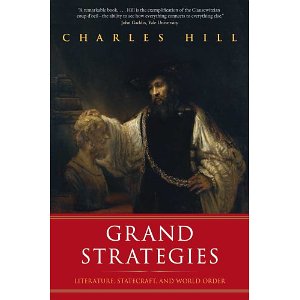
38. Grand Strategies: Literature, Statecraft, and World Order by Charles Hill.
This outstanding book shows how literary works, going back to the ancients, impact and explain statecraft, foreign and domestic policies, and culture.

39. The Great Siege: Malta 1565 by Ernle Bradford.
I have long loved this book and enjoyed teaching it.  And I got my first paycheck for a review I wrote on it that Chalcedon posted back several years ago. 


Compares the American, French, and Russian experiences.
 40. The Great Upheaval: America and the Birth of the Modern World by Jay Winik. 
There were great differences between what happened in the newly created United States, revolutionary France, and Enlightenment-led Russia under Catherine the Great.  Outstanding history; well written.

41. Groen van Prinsterer’s Lectures on Revolution and Unbelief by Harry Van Dyke.
I have written, lectured, and taught on Groen van Prinsterer in settings ranging from the east coast in Virginia to Alaska.  This book of lecures and the lengthy introduction by Harry Van Dyke is rare, but great.


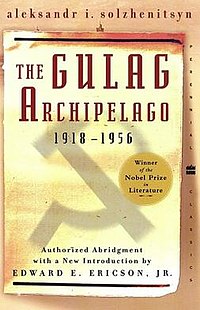
An abridgement of 3 amazing volumes.
42. The Gulag Archipelago by Alexander Solzhenitsyn
This book found the Achilles' heel in the Soviet Communist system.  I collect everything I can by and about Solzhenitsyn.  First read from this work when I was in college.


This is the best book to read on the Middle Ages.
43. The Guns of August and A Distant Mirror by Barbara Tuchman.
Barbara Tuchman wrote my favorite book on the Middle Ages and my favorite book on World War I.  She was a great writer who recast history as moral philosophy.

44. Here I Stand by Richard Bainton.
Bainton was a premier church historian.  This book is the most famous biography of Martin Luther.  It was a theological game changer when I read it back in my college years.

45. Heroes of the City of Man by Peter Leithart.
One of four books by Leithart that shows Christians how to read and study literature.  This is the best defense of a Christian reading of the pagan classics around.  I am using it as a resource with my Humanities class this year.

And we are not even to the half-way mark!

Wednesday, January 04, 2012

Strengthening Morning Coffee

Found this piece of gold on a bargain table at a local Christian bookstore:

A powerful study by a great evangelical Calvinist.
A servant works for someone else.  A slave belongs to someone else.  The key Biblical word is doulos; too often translated as servant, it means slave.

The beginnings of a study of I Timothy which will, DV, lead to a preaching series:

From Crossway Books "Preaching the Word" series.