Thursday, September 20, 2012

Election Sweep...and Houseblog Scoop

Romney realizes mistake:  Opposing Obama, the Democrats, and everyone needing guv'mint help
In case you haven’t realized it, the Presidential election for 2012 is over. It ended this week, or maybe last week. If you happen to be tied to the old “first Tuesday after the first Monday in November” routine, you may have thought the election would be decided about 40 plus days from now by an election.


Wrong. It is over. President Barack Obama has won a resounding re-election. A landslide. A mandate. A renewed affirmation for hope and change.

No, the people have not voted. No electoral votes have been cast. The debates haven’t even been held yet. But the election is over. Countless members of the media have told us so. Romney is finished. Romney has sealed his defeat. Romney has proven his ineptness for the job. The media have cast the deciding votes. Polling showing Romney gains in certain swing states is irrelevant.  Obama wins second term. Over and done.

Actually, the election was finished twice. First, Romney’s comments on events in Libya proved he is not up to the job in regard to foreign policy. Heck, the guy has never even won a Nobel Peace Prize. Second, in a secret talk, Romney he admitted, confessed, realized that people who are dependent upon government will not be seen at welfare agencies sporting “Romney for President” buttons. This 47 percent of the people will no more support Romney than rural Pennsylvanians would give up God and guns.

Most of that 47 percent had been reading National Review and The Weekly Standard and seriously contemplating putting a Romney sign in the front yard until they heard that comment. But that You-tube ended the election.

Actually, the 2012 election has ended several times along the way. Each time, Romney has lost and Obama has won.

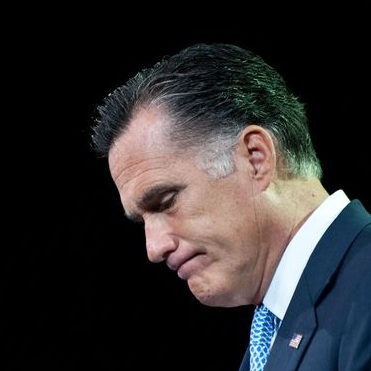
Mitt Romney, facing a brokered convention

First in ended back in the spring. During the primary season, Romney did not seal the deal on the nomination in the Iowa caucus. Or New Hampshire. Or South Carolina. Stupid Republicans kept insisting that primaries should have more than one candidate and they kept voting for different candidates. This would, as predicted, lead to a brokered convention. By March, the brokered convention was an accepted fact. The brokered convention would produce a candidate other than either Romney, Santorum, or Gingrich. That poor candidate, who might have been Jeb Bush, would have only had 3 months to make his case to the American people.

Up through at least the 1960s, it was not always certain who a party’s candidate would be until the convention. (Nominations were actually not totally settled until the conventions as late as 1980.) How in the world could a candidate reach out to and present himself to America in only 3 months? Even though both Roosevelts, Kennedy, Eisenhower, Harding, Taft, Wilson, and dozens of other Presidents and Presidential candidates made their case in the past, it is impossible now. Before the Internet, before television, before radio, nominees were chosen at conventions in the summer and either elected or defeated in November. But it is impossible now. A candidate needs at least 4 years to clarify his views to the American people.

Romney also lost the race during the summer. His trip to the Olympics in London and to Europe proved his lack of foreign policy skills. Also, he is too rich. And cruel to dogs. Also, he was a businessman. And wealthy.

Romney realizes that Ryan is a Right Wing ideologue and thinking, "Why didn't I chose a liberal Democrat as my running mate?"

Then he chose Paul Ryan as his Vice Presidential candidate. Romney lost the election when he made that choice. It was clear that Romney was caving in to the Right Wing of the Republican Party. When will they (more moderate Republicans) learn? The more the candidate is like Ronald Reagan, the more he will cause Republicans to lose, like Reagan. Romney could have won the election if he had not kowtowed to the extreme Right Wing. He could have chosen someone who would have signaled a different perspective, like maybe picking Barack Obama or Michele Obama as his Veep.

In the case of Ryan, his economic policy was clear:

1. Tax breaks to the rich.

2. More taxes on the middle class.

3. Cut off all government help to the 47 percent who don’t vote for Romney.

4. Fill gullies with elderly people who don’t vote for Romney.

Note also that the name Ryan is purposely designed to rhyme with Ayn, as in Ayn Rand. Therefore, Paul Ryan would enact Ayn Rand’s economic and social policy as found in Atlas Shrugged. Except, he would not use any part of her social policy that interfered with abortion or gay marriage. Note his first name—Paul, as in Pope Paul. Sharing a name with a Catholic Pope means that Ryan is really a southern Protestant Christian fundamentalist who wants to impose creation science in the classroom and stone all non-Christians. Paul Ryan would impose harsh social moralities on all the 47 percent who were not thrown into gullies.

Next Romney lost the election when he gave his acceptance speech. Whatever he said or didn’t say, it was unconvincing. He could have said something like, “One million dollars to the first 279 callers who are part of the 47 percent who receive government support,” or “I concede” or “Vote for Barack Obama, my running mate.”

Next he lost when he did not receive enough of a convention bounce. A convention bounce is what elected Michael Dukakis to the Presidency. If Romney had started polling numbers around, say 95 percent in the swing states after the convention, then maybe we would still need an election.

Romney uses a calculator and does Bill Clinton's arithmetic.

Next, Romney lost when former President Bill Clinton added up the arithmetic. Even Republicans ought to figure this out: The economy was booming under Bill Clinton, the economy is awful, under Barack Obama, therefore, Re-elect Obama.

Then Romney lost once again when President Obama gave his acceptance speech. Because it could possibly have rained, the Obama venue was moved indoors. Had it been possible, all America, including the 47 percent dependent upon government transportation, would have been there.  Nevertheless, it was great.  It pointed out how Barack Obama, in just one term, was...Barack Obama.

Election 2012 is over. Now let’s look ahead to 2016. Will it be Hillary or Joe Biden?
Election 2016:  Joe or Hillary.  I'll take them both!

Tuesday, September 18, 2012

The Great Books Reader


A university packed in 645 pages of great literature and thought.
The Great Books Reader is subtitled Excerpts and Essays on the Most Influential Books on Western Civilization.  With words like Great Books, Most Influential Books, and Western Civilization, I was automatically sold on this big thick collection. Add to that the editor--John Mark Reynolds who authored When Athens Met Jerusalem: An Introduction to Classical and Christian Thought and who is the founder and director of the Torrey Honors Institute, which is Biola University's great books program.

The Editor, John Mark Reynolds: In the tradition of Cleanth Brooks, Louise Cowan, Mel Bradford, and Leland Ryken.


I have spent a lifetime with books.  I was a reader in my youth and became a reader and collector when I was in college.  I have desired more and more shelves sagging with more and more books.  But I want to read them, know them, and personally value them.  I want to be grounded in the Great Books, the Classics, the Canon of Western Civilization.  I have spent years catching up on much of what should have been read in high school, college, and beyond.

I have been a serious reader since high school.  I knocked out a few classics during those years, without being able to appreciate them fully.  A classic calls for a reader and either a mentor or a group to enhance the experience.  My college years enabled me to read some more Great Books, but like much in the modern university experience, the thrust was toward "the latest scholarship."  Thankfully, when I took literature classes, we read the literary works.

My curve on the classics and great works turned radically upward when I left public school and began teaching in a classical Christian school.  Very quickly, we dove into Macbeth, Hamlet, Henry V, and Paradise Lost. As the years went by, I started the Humanities program, which is very similar to the Veritas Press Omnibus Program.

I pore over every recommended reading list I can find.  I gather books like this one and ponder how I can get a few more good reads under my belt.  Every collection or list has its certain inclusions and questionable books.  This is a fine work of excerpts and suggestions.

So, here is my rundown from the books included in The Great Books Reader:

1.  Homer.  The Odyssey.  Read it many times during my years in teaching Humanities.  Had never read it before.

2.  Plato.  The Republic.  I read it for the first time this past year in Humanities.  We have read Gorgias by Plato in the past. 

3.  Aristotle.  The Nichomachean Ethics.  I have it, but have not read it. (Shameful, I know.) But we do read portions of Aristotle's Politics, and we read Aristotle's Rhetoric.  In a few of my classes, I have read Poetics.

4.  Virgil.  The Aeneid.  I have read and taught it several times.  We also read The Georgics.

5.  Augustine.  Confessions.  I have read it and used it in class.  This year, we will only read a bit from this great, defining autobiography.  We do read City of God and On Christian Teaching.

6.  Boethius.  Consolation of Philosophy.  I have read portions of it.  Several years back, I had Matthew Smallwood come to class and share his thoughts on the book.  Nick, my eldest son, really likes this book.  I plan on reading it all this year.

7.  Thomas Aquinas.  Summa Theologica.  Not yet.  Peter Kreeft wrote the essay in the Reynolds' volume.  I have Kreeft's book Summa of the Summa, which is a shortened version of Aquinas. 

8.  Dante.  The Divine Comedy.  Read it and taught it twice.  Love it.

9.  Geoffrey Chaucer.  The Canterbury Tales.  Read the Prologue in high school, the Prologue in the original in college with a selection or two of the tales.  I have taught through the entire work about 3 times.  I really need to read and use the original this year.

10.  Erasmus.  In Praise of Folly.  Have not read this book.  I need to at least read some excerpts.

11.  Calvin.  Institutes of the Christian Religion.  I had read portions in the past.  I have taught through several large chunks of Calvin in Humanities. 

12.  Edmund Spenser.  The Fairie Queene.  Read and love one part of this great work in college. Have read and taught one part at Veritas.  (Is it Book 3?  The part about the Red Cross Knight?)

13.  Cervantes.  Don Quixote.  I feel really bad about this, but I have not read this classic.

14.  William Shakespeare.  As You Like It.  Thankfully, I had a very good Shakespeare teacher at the University of Arkansas at Little Rock.  And I have taught through quite a few Shakespeare plays in Humanities. 

15.  Descartes.  Meditations.  Recommended by several who have taken philosophy.  Unread.

16.  Milton.  Paradise Lost.  Read and taught many times.  I even taught it in a Sunday school class one summer.

17.  Pascal.  Pensees.  I have read portions of this small gem.

18.  John Locke.  An Essay Concerning Human Understanding.  Unread.

19.  Locke, again.  Two Treatises on Government.  I am familiar with the essays and author, but have not read this defining work.  A shameful admission for a teacher of American and British history and American government.  (I do find it odd that the Reynolds' collection contains 2 works by Locke.)

20.  Isaac Newton.  Mathematical Principles of Natural Philosophy.  No way, but I will someday have to buckle down and tackle this.

21.  John Wesley.  Sermons.  I have read a sermon or two.  I would prefer reading Whitefield's sermons and diaries.  But there is much profit in reading Wesley.

22.  Jane Austen.  Pride and Prejudice.  I had a great time teaching this 2 years ago.

23.  Alexis de Tocqueville.  Democracy in America.  I listened to R. J. Rushdoony's lectures on de Tocqueville years ago and loved them.  Read and taught large portions of this during my American Story year of Humanities.

24.  Karl Marx.  Communist Manifesto.  Read it in college out of curiosity.  Have read and taught it.  A really dull work.

25.  Charles Darwin.  On the Origins of Species.  I have read from and perused this book.  My Modern World class read and reported on various chapters.

26.  Tolstoy.  Anna Karenina.  I love this book.  Also, I really like War and Peace.  I teach some shorter selections by Tolstoy, including Master and Man.

27.  Dostoevsky.  The Brothers Karamazov.  Read Crime and Punishment either in college or shortly afterwards--on my own.  I have read and taught this book several times.  I also like The Idiot.

28.  Nietzsche.  Genealogy of Morals.  I have collected several of Nietzsche's works, but have not read them.

29.  Chesterton.  Orthodoxy.  Read the book a few years back, but have not taught it.

As you can see, The Great Books Reader is a good and enriching collection.  As noted in the subtitle, the book contains portions of the chosen books, along with short essays.

Here are my "scores":

16 out of 29 of the books read (either entirely or large portions read).
18 of the 28 authors read (in some cases, I read other books by the authors).
18 of the 28 authors taught in my Humanities class.

Of course, I can complain about authors and selections not included, but that is another essay.

Get a copy of The Great Books Reader and let us all catch up on our readings.


Monday, September 10, 2012

Books To Be Finished Soon

I have never figured out the phrase, "I've got to catch up with some of my reading."  I never catch up.  I only fall further and further behind. 

But I am plugging away at several books at the moment and hope to begin finishing them over the next 2 weeks.

Reprinted several times, this is the original cover of Conroy's early book.

Pat Conroy is an incredibly gifted writer and stylist.  I read My Losing Season  some months back and was then drawn to read The Lords of Discipline.  Conroy's writing career largely began with The Water is Wide.  Sometimes, the book is listed as a novel, but it is an autobiographical account of a year Conroy spent on Yamacraw Island off the coast of South Carolina.  Conroy worked as a teacher in this incredibly isolated and backward community.  This is a fun story.  Years ago, I stumbled upon the movie, starring a young Jon Voight, based on this book.

Marilynne Robinson, a Christian novelist
Two different friends in two parts of the country who don't know each other emailed me during the early summer and recommended Gilead by Marilynne Robinson.  So far, this is a solemn, but gripping book about a father writing to his son about his experiences and heritage.  Beautiful accounts of the sacraments and reading.


A powerful man who understood power
I am drawn to Andrew Jackson.  He is so much the epitome of America--roughhewn, violent, risk-taking, quirky, coarse, and devout.  He was a Presbyterian by heritage and was personally a dedicated Christian in his latter years.  Many a rough road led up to those final years.  This is a Thomas Nelson review book.


The first mark of a healthy church is expositional preaching.
I need to read and then re-read 9 Marks of a Healthy Church and then weave the lessons and 9 marks into my own preaching and teaching.  This book has some good instructions and reminders.  Thank God for Crossway Books.

And speaking of Crossway Books, Tony Reinke's Lit!  is a convincing exhortation to Christians to read and read good books.  After I first started this book, I found myself givng myself rebukes:  "Why are you reading a book about the importance of reading books?"  Granted, this book is preaching to the choir.  But I have found lots of useful reminders and ideas that I need to transport into the classroom and pulpit.
A book about reading books

Philip Graham Ryken's sermons on 1 Timothy


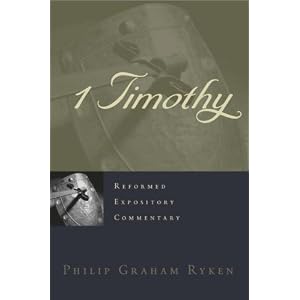
I have been preaching from 1 Timothy since back in the spring.  Out of a stack of good books, my favorite is Philip Graham Ryken's 1 Timothy from the Reformed Expository Commentary series, published by P & R (that is, Presbyterian and Reformed Publishing Company).  These sermons are good.  No, I am not stealing the material wholesale.  I do pick up pointers along the way.  I wish I had the entire series of Reformed Expository Commentaries.

And for school, nearing the confrontation with the dragon that will be Beowulf's last battle, I am reading from Seamus Heaney's wonderful translation of this poem.  I recently acquired this nice illustrated edition, but my actual reading is coming from the earlier edition that has the Anglo-Saxon on the left side and the English translation on the right side.  What a fine work.  What a delightful poem to teach.

Thursday, September 06, 2012

Massachusetts Politics, Part 5

General Wellington commented on the world changing battle of Waterloo, saying, “It was the nearest run thing you ever saw in your life.” A Napoleonic victory, had it occurred instead of Bonaparte’s defeat, would have changed everything else that happened in Europe and the world.


Likewise, politics is always a near-run thing. The inevitable is never the inevitable until it is past tense and a leisurely historian pronounces it inevitable. In 1976, Gerald Ford, the first appointed Vice President who then became President, lost narrowly to Southern Governor Jimmy Carter. Had Ford been able to delay a Nixon pardon until after the 1976 election, or had Ford answered a debate question by saying, “Yes, Poland is dominated by the Soviet Union. But we hope to change that,” then Ford could have been elected to a term of his own. Ronald Reagan would then have faded into political obscurity and movie trivia.

There is another scenario that could have happened. In 1973, President Richard Nixon could have appointed former New York Governor Nelson Rockefeller to be his next Vice President. Rockefeller would have become President when Nixon resigned in August 1974. In 1976, Rocky would have been running for a term of his own.

And, Democrat Senator Henry “Scoop” Jackson could have continued his early wins in the Democrat primaries and bested upstart and relatively unknown Jimmy Carter and won the Democrat nomination.

President Rockefeller conversing with Democratic opponent, Sen. Henry Jackson--a true might have been.

Political history is made up of a million “might have been’s.” But the real work of winning elections is different.  Winning candidates and campaigns are based on calculating what might actually work and will actually win. A good idea, a good political platform, that appeals to 49 percent of the voters or less is a politically dead idea. It might work for books on political science, but it doesn’t work in the voting precincts. Likewise, a basketball coach can draw out a plan that is outstanding, but if he doesn’t have players who can execute the play and drop the ball in the basket, it is just daydreaming.

The key to a candidate winning is his winning. “Sen. X would win if only people would give him the money.” “Gov. Y would win if only people would get behind him.” “Congressman Z would win if only good political managers would join his team.” “Candidate XYZ would be winning if only the media would give him the coverage.”

Add to those statements, this one: I would have more than 22 Olympic medals if only I could swim better or faster than Michael Phelps.

Like it or not, the reason a candidate gets money, polls numbers and votes, a first class staff, and media coverage is that he can win. Yes, lots of media folk are liberals through and through. But the media is a competitive operation. If I am writing news stories about a losing candidate, and you are writing news stories about a winning candidate, guess who gets the by-lines or top-of-the hour reports? (In early 1980, reporters assigned to Ronald Reagan were depressed because they had what they thought was a losing assignment. The same thing happened for any reporter who covered Rick Santorum prior to the Iowa caucus.)

Coalitions, bringing people together, uniting separate forces, embracing a big tent: These things are essential to political victory. Deeply held convictions, narrow viewpoints, focused limited positions: These things usually don’t build winning results.

Assume I have 25 non-negotiable political convictions. Maybe, 20 percent of the voters in America agree with more than half of those convictions. I can run as a third party candidate and try to appeal to those 20 percent who agree with me on 10 to 15 of my convictions. You will begin to hear phrases like, “Boy, I like that Ben House guy….But he ain’t got a chance.”

“Vote for X: He’s Going to Lose” just somehow doesn’t work in politics. Going down in a blaze of glory has one really good part—the glory—and one really bad part—the blaze. Losers in politics lose. Thomas Jefferson got the Vice Presidency in 1796when he lost the Presidential race, but the rules changed and that hasn’t happened since.

If I look at the two national parties and decide that one is opposed to 20 or more of my 25 non-negotiables, but the other party is favorable to 5 or more of my political non-negotiables, I have two choices. I can work long-term, be patient, and pray “On earth as it is in Heaven,” or I can wait on voting until earth is as it is in Heaven.

From Theory to Fact

Governor Mitt Romney was not in my top five favored candidates for the Republican nomination. I found more favorable traits in nearly all of his primary opponents and wished that another 20 different Republicans had been winning primaries instead of Romney.

Every candidate I preferred either did not run or fell before the Romney political organization. If only Rick Santorum had Newt Gingrich’s debating skills, Romney’s money, and had been governor of Texas, and had co-authored both the Federalist Papers and the Anti-Federalist papers, and had co-starred with Ronald Reagan in Hellcats of the Navy…. If only Rick Santorum had won the primaries he lost….Add to that, if only I could swim and swim faster and better than that Phelps guy, then….

A bedrock of American political success is business. Candidates boast of the support from common folks sending in checks for ten bucks. But money is essential for politics. In the Republican primary in my congressional district this past spring, we had three good conservative people competing. One was able to far out-distance the others due to his support from groups and organizations with political power, a.k.a., money. People who know money and how to make money and how to use money never say, “That won’t work. I think I will invest in it.” Nor do they say, “This guy can’t win. Give him a million bucks.”

America is not a socialist country. Granted, we have too much government involvement in industries, businesses, and trade. Granted, we have far too many regulations and guidelines. Granted, there is lots of coziness between the powerbrokers of business and the powerbrokers of politics. But Sam Walton was not a government employee.

Both the Democrat and Republican parties work with and for big business. “Rich Republicans” is an effective political theme for Democratic demonization. That theme gets lots of air time when rich Democrats pump money into Democrat coffers. Democrat Presidential candidates like Al Gore, John Kerry, and Barack Obama berate Republican tax policies that enhance their personal lifestyles of the rich and famous.

This is a rich country with lots and lots of successful businesses. From Fortune 500 companies to successful locally owned shops, America is a business-oriented country. As Calvin Coolidge wisely said, “The business of America is business.” America is also a big, really big, country. Lots of land, lots of resources, lots of people, and lots of connections to the world.

The coffee I drank this morning wasn’t grown in the South. The books I read from were not written or published in my neighborhood. This aging laptop isn’t homegrown in Arkansas. When I post this article on the Internet, it will not be merely posted on the church door here in my community.

This vast land, nation, social and economic order has a vast series of governmental authorities that rule over portions of it. We need bigger doses of freedom, private enterprise, and local control. We need a better Kuyperian understanding and implementation of sphere sovereignty. But bringing the vastness in line with the localities, balancing the One and the Many, maintaining Freedom and Form, finding the workable equations for federalism, all these things are processes.

If I had sudden and total power, these changes would not be processes. They would be executive decrees. My ideas would be successful and my political Utopia would work for as long as I continued writing the novel. Meanwhile, in my other fantasy universe, I just swept past that slug Phelps in the race across the English Channel.

The Real World of Politics:  Romney versus Obama
In the real world, successful businessman and successful Olympic organizer and successful governor of Massachusetts Mitt Romney has won the Republican nomination. He understands certain things quite well. He understands how money works and how politics works. I wish he were a Protestant (a Calvinist, in fact), a former governor of a Southern state, a more consistent free market man, a more doctrinaire conservative, and a more articulate debater, and a cousin of mine.

Of these things I am certain: When Mitt Romney walks into the Oval Office, he will know how to run the government, represent America globally in a greater way, help get the economy clicking, and bring dignity to the office. I am expecting to be sorely disappointed with many of the Romney Administration actions, but I expect that there will be quite a few that I will applaud.

If Romney were running against Harry Truman, then I might be voting for a Democrat. If Romney were running against Grover Cleveland, I would be voting for the Democrat candidate. But another rule of politics is this: Then is not now. It applies to the past and the future. The election of the past or the election of the future is not now. Romney isn’t running against a more favorable Democrat, such as Cleveland, Truman, or even the less offensive Bill Clinton or Jimmy Carter. (Pres. Obama has certainly changed the perception many of us have toward those latter two Presidents.)

At least two major things about President Obama really bother me: The incompetence of his rule and the coherence of his vision. I think he has failed at many points (foreign policy and the economy, as the two main ones), but I would be more concerned about him succeeding. Considering his lack of experience four years ago, he might be much more successful at his agenda now that he has experience.

If Romney loses this upcoming tight, bitter election, the 2016 Republican field looks promising. It will basically boil down to Paul Ryan or Marco Rubio (assuming that present political nuances continue, and they never do). That sounds exciting. Add Sen. Rand Paul to that list running on the theme of, “Like father, like son.” Add re-runs by Rick Santorum and Rick Perry, both looking older and maybe wiser.

But four years of the current leadership cannot be slept through in Rip Van Winkle fashion. Then is not now. And politics is always a near run thing.