Sunday, October 28, 2012

For Work and Pleasure

This is the third time I have worked through and taught through Augustine's City of God.  I have been more plodding, more deliberate than ever.  It really takes several readings to get below the surface of this defining Christian classic.

City of God - Abridged


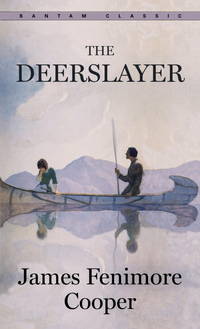
This is about the fourth time for me to read The Deerslayer by James Fenimore Cooper.  And this is the third time for me to teach my junior high students through this book.  For sure, junior high kids of today are not prone to plow through 500 plus pages of Cooper's labored prose.  He is worth the effort.  The Deerslayer, that is, the character Natty Bumpo, is the epitome of the frontier hero, a man of honor, a knight, and a Christian gentleman.  The true gist of the story is the definition of true manhood.  I need the lessons myself and am certain that my students do as well.


I am also reading The Mormonizing of America by Stephen Mansfield.  The Mormon movement is a very powerful force in America.  I hope that it is a more powerful force after November 6.  But with all of the appreciation due for the work ethic and general morality of the members of the Church of Latter Day Saints, we need to understand their history and beliefs.  These are not mere Christians with a few quirks. 


I have also recently started Faulkner and Hemingway: Biography of a Literary Rivalry by Joseph Fruscione.  I love the works and styles of both writers.  In the subtle feud that existed between the two, I would have bet my money on Hemingway if the matter were to be settled with fists.  If they were in a drinking contest, who knows?  As far as the depth and durability of the writings, I think Faulkner has the upper hand.  Nevertheless, I am quite interested in delving further into this study.


Fills in a Gap Among Us Reformed Folk

  The doctrinal teachings of the Reformed faith are like a great mountain range.  Whether one is scaling a particular mountain or admiring the vast slopes from a distance, the effects are awesome.  Along with the grandeur of Reformed theology, there are the great worldview thinkers and applications.  I was first made alive to the beauty of the Triune God and the grace of God and the Incarnation of Christ through reading theology.  The application to all areas of life and thought came through the worldview thinkers.  Whether it was Abraham Kuyper's Lectures on Calvinism or Francis Schaeffer's How Should We Then Live?, I have been stunned, shaken, and driven by the power of God's transforming Word and Grace as applied in education, history, family life, politics, art, economics, and other realms of human action.

But there is a third powerful pillar to the Reformed experience.  It is what we might call experiential theology or practical theology.  More commonly, we might speak of the spiritual disciplines or of personal holiness.  Admittedly, it has sometimes been disappointing to see others and embarassing to see myself caught up in a theological point or focused on some aspect of applyng a Christian worldview, and yet, deficient in the area of personal pursuit of holiness.  In other words, it is easy to argue with an Arminian and even easier to trump a secularist, but hard to cultivate a heart after God.

In the great tradition of Christian holiness.
Through the years, I have read, in part or in whole, from many fine works emphasizing personal holiness.  One can glean from the great men of the Puritan era, such as John Owens or Richard Baxter.  Or one can read more recent authors like Jerry Bridges and Donald Whitney.  Such reading is vital for the spiritual heart health.  It is also vital that sound preaching be directed toward holy living as well.

Kevin DeYoung has added another fine book to the list of books on personal Christian living.  Titled The Hole in Our Holiness, it calls attention to the neglect we often have toward holiness.  It is easy to fall off on the side of legalism, or to lean the other way and fall off in looseness in Christian living.

I read this book about a month ago and have now started rereading it.  This is a fine morning read.  DeYoung is witty and searching.  I am contemplating how to get this book in the hands of many friends and church members.  It is short and hits hard.

I hope maybe to list more specifics later.

Saturday, October 13, 2012

Some Books on Politics

Every now and then, I have to break away from the all consuming political atmosphere.  The debates, the articles on the Internet, the discussions.  If politics had calories, I would be weighing 400 pounds by now. 
So, to ease my mind off of the recent radical turn in the political race, Gov. Romney's first debate with Pres. Obama, and the laughing revival of Vice President Biden, I break away from it all and go back to the books.

I recently read Behind the Oval Office: Winning the Presidency in the Nineties by Dick Morris, who had been President Clinton's chief strategist for many of his political campaigns.

A look at Pres. Clinton's success before his public moral failures
This book has a fascinating perspective.  Time has changed much of what is described here.  Morris was a friend and advisor to Bill Clinton when he was governor of Arkansas and especially when he was running for re-election in 1996.  We forgot that Clinton was vulnerable in 1996.  He could have been defeated.  He had, however, a strong economy, a weak opponent (Sen. Bob Dole), and a good campaign strategy, or strategist.  The Clinton moral scandals were only hints or rumors in this book.  Morris is now much more strongly favorable to Republicans, and he has been a frequent and strong critic of the Clintons in recent years.

I read this book to better understand this year's election.  What does an incumbent President need to do to get re-elected.  One thing is clear:  2012 is not 1996 and Pres. Obama is not Bill Clinton.  The latter part is a compliment to Clinton, not Obama.

What I came out of the book disliking about Clinton:  He governed by polls.  Morris fed him constant polling data.  Morris even advised Clinton on where to vacation.  Voters liked to see the President going to Yellowstone Park rather than to Martha's Vineyard.

What I came out appreciating about Clinton:  Clinton did know how to govern.  He worked wisely with Republican leaders in the Senate and the House, particularly the Senate majority leader, Trent Lott.  Clinton wisely steared away from the extreme liberalism of many on his staff.  He wisely figured how to find a middle ground on issues that enabled him to rule from the center.  He had the genius of a Reagan, although not the principles of Reagan.  Sadly, the current President cannot govern with either his own party or with the other party.

Currently, I am reading Game Change by John Heilemann and Mark Halperin.

The election that brought Hope and Change to America
This book, in which I am approaching the half-way mark, is about the 2008 election.  I got a nearly new looking copy cheap and am consumed with trying to figure out this election by comparing it to the last one.  One thing is clear so far:  Obama, the Clintons, and John Edwards are not nice people.  This book was written by journalists shortly after the 2008 election.  Barack Obama and Hillary Clinton were game changers.  Then-Senator Obama's unreadiness for office is apparent from the book.  Hillary Clinton had her own troubles, and John Edwards was a complete jerk.  (I haven't gotten to Sen. McCain or Gov. Palin yet in the book.)  Another thing is clear from the book:  2012 is not 2008.

And now, for a really good book in a really good series:

The newly published fourth volume of The Years of Lyndon Johnson
I recently read and thoroughly enjoyed The Master of the Senate, which was the third volume of the multi-volume biography of Lyndon Johnson by Robert Caro.  I read and loved the first volume over 20 years ago and read the second volume many years ago.  I bought the third volume back around 2002, but didn't pick it up to read until I realized that the latest volume was out.

I am now well into this book.  This series is absolutely essential for anyone interested in politics.  It has nothing to do with either liking or disliking LBJ.  He was largely unlikeable.  But it has everything to do with understanding how politics works.  You may not like the nitty gritty of politics, but one had better know the field before getting involved.

One of the main lessons of this book and its prequel is this:  Johnson knew how to get things done.  Even conservatives can learn from the life of Johnson.

Big question:  When will Caro, now 76 years old, get the next volume completed and how long (how many pages) will it be?

Monday, October 01, 2012

Andrew Jackson--Fightin' Gen'ral

Robert Remini's 3 volume set on the life of Andrew Jackson

For the serious students of American history, particularly pre-Civil War or military history or Presidential history, the biggest name associated with studies of Andrew Jackson is Robert Remini. He has written around 10 volumes on Andrew Jackson and several other books on Jackson's contemporaries. Another great read is Jon Meacham's Pulitzer Prize winning AMERICAN LION: ANDREW JACKSON IN THE WHITE HOUSE. Yet another major work on Jackson that has been around for some time is Arthur Schlesinger's Age of Jackson.  An older book is Marquis James' biography of Jackson. And if one simply wants to listen to a song, you cannot beat the Jimmy Driftwood song, best performed by Johnny Horton, "The Battle of New Orleans."


And, by all means, go to the Jackson homeplace, just to the east of Nashville, Tennessee, the Hermitage.

Jackson's plantation house in Nashville:  The Hermitage

Andrew Jackson is a powerful force in American history. He was baptized in blood in the War for Independence. He was the defining image of the self-made frontiersman. He was a self-educated, rough-hewn, battle scarred, impulsive, courageous all-American. It is hard to not love him, but even harder to love him. He would probably run most of the current Washingtonians out of town, or hang them.

It is an irony of the economic idiocy of our time that Jackson's face is on the paper-printed Federal Reserve Note that we call a twenty dollar bill.

Jackson would abolish the Federal Reserve if he were the President.
Jackson was a leader. There were basically two types of men who came in contact with him during his earthly days: those who followed him and those who were crushed by him.

Paul Vickery's short biography is a good starting place (or a good review) of Jackson's life. Much of the book's focus is on Jackson's military campaigns. That is fitting since it is part of a series published by Thomas Nelson called The Generals. It is also fitting since so much of Jackson's life and career was fighting.
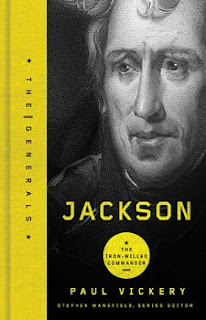

A straight-to-the-point biography of Old Hickory.

As a young teen-age boy, Jackson fought against the British in the War for Independence. That war nearly wiped out his entire family. It gave Jackson a life-long enmity against the British.

Jackson fought duels throughout his life. Much of his adult life, he suffered from numerous ailments due to the bullets he carried in his body.

Jackson fought against the Indian tribes in Tennesee, Alabama, and Florida. He captured West Florida for the United States.  Some of his battles were for control of his rebellious troops or against officials who blocked his efforts to reach his goals.  It was his strong-willed leadership that earned him the nickname "Old Hickory."

The high point of his career was his defeat of General Packenham and the British army at the Battle of New Orleans. Of course, the peace treaty had already been signed and the combatants did not know it. But after New Orleans, Americans knew they had a hero who could whip any and every opponent who stepped in his path.

Jackson's political career that took him to the White House and sustained him for 8 years and 3 Presidential elections was one continual battle.

Again, Vickery's book is short, but nevertheless, a good primer or review of the life of a defining figure.

One final note: Jackson was raised on the Westminster Shorter Catechism. He was a product of the Scots-Irish Presbyterian theology that was transplanted from Europe to the American frontier. He married a pious woman. All his days, he honored the Christian faith, and in his last years, he made his own public profession of faith and was baptized. That too is covered in this delightful book.

I received this book as a review copy from the publisher. I didn't have to be favorable, but really did like the book and the topic.