Tuesday, July 31, 2012

Massachusetts and American Politics

Senator Henry Cabot Lodge
Massachusetts has long been a power in American politics.  In some ways, Massachusetts has been more of a pressure than a power.  As a colony that was dominated by Puritan settlers and culture, Massachusetts Bay Colony quickly took a moral and political lead in our country's early development.  The American War for Independence was largely pushed into happening because of events in Boston--the so-called "Boston Massacre" and the Boston Tea Party. 

The Adams cousins, John Hancock, Paul Revere, and others secured Massachusetts a pivotal role in the history of our nation's struggle for freedom and independence.  The opening phases of the war were in Massachusetts--the battles of Lexington and Concord (which resulted in Paul Revere's ride) and the Battle of Bunker or Breed's Hill (best chronicled in Thomas Fleming's book Now We Are Enemies). 

John Adams, his cousin Sam Adams, and his son John Quincy Adams were all pivotal figures in the Republic from the time of the Declaration of Independence up to events leading to the War Between the States.  By the early decades of the 1800s, the educational attainments of the Boston culture began to dominate literature (taking the literary mantle from the Knickerbooker literary culture of New York).
With figures like Charles Sumner (and no, I don't like him), Henry Adams (the author and a scion of the Adams' political family),  Henry Wadsworth Longfellow, Nathaniel Hawthorne, and others, Massachusetts continued its impact on American history and culture. 

Unlike Virginia, Ohio, and New York, it was not a mother of too many Presidents.  In fact, both John Adams and John Quincy Adams were one termers.

In the Twentieth Century, Massachusetts' role centered around a key figure and idea:  Henry Cabot Lodge, the Boston Brahmin.  Lodge epitomized all the strengths of the state:  educated at Harvard, descendant of prominent families, conservative in basic principles, and visionary toward the nation.  If Lodge had never entered politics, he would still have been a significant figure because of his work as a writer and historian.
(The Harvard education issue itself shows the massive influence that the state has had upon many aspects of American culture.)

Lodge, Sr. allied himself with the most dynamic and successful politician of that time--Theodore Roosevelt.  They were political buddies and sometimes collaborators on writing projects.  Together, they compiled a work titled Hero Tales from American History that is still a great source for understanding this country. 
Since Massachusetts was solidly Republican (part of the old Rock-Ribbed New England Republican establishment), there was never much of a chance of Lodge, Sr. achieving the highest office.  Political parties looked at swing states to find Presidential timber.  He was the Republican Senate Majority Leader and he did keep the U.S. from joining the League of Nations, thus sparing the nation from some of the internationalist designs of President Woodrow Wilson.


President John Calvin Coolidge, his name denotes his heritage. 
The next major Massachusett's political figure was Calvin Coolidge.  Coolidge was an 'accidental President.'  He came to national fame when he, as the Governor of Massachusetts, broke a police strike, saying, "There is no right to strike against the public safety by anyone, anywhere, any time."  This statement gave Americans a sense of the commonplace grit and principle of the man.  He made a good running mate for Ohio Senator Warren G. Harding, who ran against 8 years of Wilsonian Progressivism and the post-World War I weariness.  Harding, after a few bad cabinet choices, began his stride in both economic conservative principles and better management.  Unfortunately, he died in office.  Thankfully, Coolidge was well equipped for the job he now had.

For nearly two terms (from 1923 to 1929), he served as one of the most competent, wise, frugal, and successful Presidents ever.  For various reasons, almost none of which were blameable on Coolidge, the nation began a plunge into the Great Depression early in the administration of Coolidge's successor, Herbert Hoover.  A historical gloom covered the successes of both Coolidge and Harding.  He was among the last successful exemplars of the old WASP (White Anglo-Saxon Protestant) ruling elite from Massachusetts (reaching back to John Adams).

The Lodge family returned to prominence when Henry Cabot Lodge, Sr.'s namesake and grandson, Henry Cabot Lodge, Jr. was elected to the Senate in 1936. Lodge had a notable career during the 1930s through the 1940s.  He served in the Senate and the military until President Roosevelt ordered congressmen serving in the military to resign from one of their positions.  Lodge, Jr. came back to the Senate, won re-election in 1942, resigned and went back on active duty in the military.  (He was awarded medals for his single-handed capture of a four man German patrol.)  In 1946, he won another term in the Senate.

In 1952, the political tide changed in Massachusetts.  Young Congressman John F. Kennedy defeated the more qualified Senator Lodge.  Kennedy's father, Joseph P. Kennedy, had built upon the Fitgerald family's political involvement in displacing the WASP political culture.   The Kennedys mobilized the Irish Catholic and New Deal vote to displace the older establishment.  But it was always a revolution designed to enter the establishment, not to change it.  Joseph Kennedy had botched his chances at higher office when he bungled his service as Ambassador to Great Britain during World War II.  He suggested that Britain should negotiate a surrender to Hitler.  His own political future botched, Kennedy continued on as an advisor and confidant to political leaders, and worked to groom his sons for office.

Four years later, Senator John F. Kennedy made his first attempt to get on a national ticket.
Since 1956, a Massachusetts political leader has vied for the nomination or election to one of the top offices a total of 10 times.  And only one has been a winner.

Two Sons of Massachusetts:  President John F. Kennedy and Ambassador Henry Cabot Lodge, Jr.


To Be Continued.

Friday, July 27, 2012

Campaigns and Commanders


OUPress.Data.Entities.Image
A dandy study of the British army
A few years back, I received a review copy of With Zeal and With Bayonets Only: The British Army on Campaign in North America, 1775-1783 by Matthew Spring. This is a serious, scholarly detailed study of an army of which we Americans usually have only bad associations. After all, the British army opposed George Washington, the American War for Independence, the Declaration of Independence, and everything that we identify with the founding virtues of our nation. Try hard to think of a movie portraying British troops where they do not appear effete, stuffy, arrogant, overly powdered and wigged, and ultimately defeated. Yet Spring shows the incredible fighting power of the British army throughout the 18th and early 19th centuries (and much more could be said about the 20th century).

This book also introduced me to an amazing series of books published by the University of Oklahoma Press that is called the "Campaigns and Commanders" series.  There are currently about 36 books in this series, and in my extreme poverty and deprivation, I only have about 7 of them. 

The editor for the series is Professor Gregory J. W. Urwin and the advisory board is a "Who's Who" of academic military historians, including Victor Davis Hansen, who is perhaps the best military historian in America today.  The series consists of intense serious studies of particular battles, campaigns, and figures in military history across the centuries.  The survey of my books from this series will confirm the breadth and scope of the series.


OUPress.Data.Entities.Image
A Virginian who fought for "Those People"
 The state of Virginia produced many of the best generals of the War Between the States on both sides.
The names of Robert E. Lee, Stonewall Jackson, Joe Johnston, and A.P. Hill need no defense regarding the Virginian contribution to the Confederacy.  But it was the old Virginian Winfield Scott  who plotted out the greater strategy for the North.  And it was another Virginian who was serving in the Northern army, George Thomas, who kept the Battle of Chickamagua from becoming a total game changer for the war.  He was known as "The Rock of Chickamagua."   Christopher Eiolf's biography is a good study of this man of convictions who fought nobly for "Those People."  How often I have wished that he had stuck to his own side and his own native state.

OUPress.Data.Entities.Image
Gettysburg, Vicksburg, and Helena, Arkansas--July 1863
Professor Mark Christ is one of the best historians ever in regard to the role of Arkansas in the War Between the States.  Years ago, I read his excellent contribution to Rugged and Sublime: The Civil War in Arkansas.  If the western part of the War (meaning the battles in Tennessee, Mississippi, and Georgia) gets overshadowed by the the eastern theater (dominated by Lee and Jackson), then Arkansas really gets pushed to the peripheries.  Yet, there were battles and skirmishes throughout and around the state and control of Arkansas was a critical component in the ultimate Northern triumph.  Arkansas truly experienced "Civil War" as long-standing rival political groups used the greater war effort as means to gain local power and control.


OUPress.Data.Entities.Image
Clausewitz disses Wellington
There is not serious study of military history without the frequent confronting of the name: Carl Von Clausewitz.  This German was a military historian and thinker who influenced wars and warfare in the 19th and 20th centuries.  His classic work is On War.  This work, Clauswitz's critique of the British General Wellington at the Battle of Waterloo, was suppressed by the English, particularly General Wellington and his heirs, for over 150 years.

I admit that this work, the battle, General Wellington, the Napoleonic Wars, and the like are all outside my area of study and knowledge.  (Meaning, I don't even know enough to nod my head intelligently while listening to someone who does know something.  I have read 3 or 4 works on Napoleon over the years, but am seriously challenged in this area.)  This kind of "primary source" still has its worth.  It is a reminder that history as taught and believed is not set in stone, but it ever changing as sources are uncovered or reinterpreted.  It is often true that winners write the history.  It is also often true that winners suppress other opinions.


OUPress.Data.Entities.Image
A study of the Mexican-American War
 A Perfect Gibraltar: The Battle for Monterry, Mexico, 1846 by Christopher Dishman is a study about a 3 day battle in the Mexican-American war that involved a future American President (Zachary Taylor) and quite a few future military leaders in the War Between the States.  Quoting from the dust jacket:  "The first day of battle was deadly for Americans, especially for the newly graduated West Point cadets."  In short order, the Americans learned to adjust their fighting styles and began learning how to conduct urban warfare. (Sounds increasingly relevant.) 

There is no serious study of the American War Between the States without a serius concomitant study of the Mexican-American War.

OUPress.Data.Entities.Image
One of those nightmarish World War II studies about the conquest of a Pacific island.
Victory at Peleliu: The 81st Infantry Division's Pacific Campaign by Bobby Blair and John Peter DeCioccio is a book you should never discuss around your uncle who served in the Marines.  You can talk about it around the other uncle who served in the army infantry.  This largely either forgotten or overlooked island campaign began as a relatively easy (compared to other battles) conquest of an island.  The Marines were going to take the island and its airstrip in about 4 days.  The entrenched Japanese turned this battle into a war of attrition.  After about a week of fighting, the 1st Marines were pulled out and the 81st Army Infantry Division came in and spent the next 2 months in bloody fighting that ultimately captured the island.
(I have no idea how the men of World War II--in all branches--did what they did.  I get overwhelmed by high grass in the front yard.)


OUPress.Data.Entities.Image
Pusan--a great American victory in the Korean conflict
Into the Breach at Pusan: the 1st Provisional Marine Brigade in the Korean War by Kenneth Estes.  The Korean Conflict was a great American success story of the 20th century.  Its heroes were flawed (MacArthur and Truman), its successes incomplete, and its legacy overlooked and overshadowed by the symmetry of World War II's victory and Vietnam's muddle.  The battle at Pusan saved the war and the peninsula. 

As always, the issue is time and money.  Military history is rich and inspiring (as well as depressing).  Thanks to the University of Oklahoma Press for enriching our understanding through this series.

Saturday, July 21, 2012

The Father of Containment


Why there was no World War III

This is adapted from my Amazon review for George F. Kennan: An American Life by John Lewis Gaddis:
This prize winning biography has generally been favorably reviewed by scholars and others who have an interest in and awareness of this man who was a major architect of America's policy during the Cold War (c. 1945-1993).  Anyone who is called upon by career or personal interest to study the Truman-Eisenhower-Kennedy-Johnson, etc. administrations in regard to America's dealing with the Soviet Union could profit from this study.  The book is lengthy and scholarly.  It assumes the reader has a working knowledge of the main participants in the Cold War (such as George Marshall, Dean Acheson, and John Foster Dulles) and of the main issues and events of that long struggle (particularly regarding the division of Germany and Berlin).

Having both labored to get through this book and having considered some of the better readers' reviews, I will "amen" the praises and worth and offer a slightly ambiguous "hmmm" regarding other aspects of the book.  The importance of George F. Kennan, the scholarly achievement of John Lewis Gaddis (who netted a Pulitzer for this work), and the survey of America's Cold War through the lens of one of the primary architects are all duly noted.


Here are the positive points I would list about the book:

1. It puts the spotlight on a key figure in American foreign policy. Even though Keenan was often critical of the United States and of particular political administrations, he has to be ranked as a dedicated public servant and statesman. It is not just a matter of agreeing or disagreeing, but of noting his life-long labors in foreign policy. This book is a powerful reminder that the people in the headlines, and that is often the elected officials, do not have the long-term impact as some of the dedicated, desk-bound laborers at "Foggy Bottom" or other places where statecraft is crafted.

2. It balances the diplomat with the man. Kennan's own Presbyterian heritage would affirm that we are all sinners and human. Keenan slipped on many occasions. He fell into marital infidelity on several occasions, and he suffered from lots of personal angst over his views, his political relationships, and other areas of life. The survey of his life as a totality is what matters.  I hope from Keenan's reading of Calvin's Institutes and other Christian work that his faith was more than just a nominal belief in mankind.

3. This book's subject pretty much parallels all the major events of the twentieth century. Quite often, Keenan was in or near the center of major events. He had an impact on every Presidential administration from Truman to Clinton. Some he praised and some praised him.  On several occasions, it was his words and thoughts that provided the direction our country took.  He is, as often noted, the Father of Containment.  As the book aptly noted in the last section, the alternative to Containment was war.  And the great war between the Free World and the Communist World never took place.

4. As Gaddis notes, Keenan totally misunderstood Ronald Reagan. This part of the book is somewhat funny. Reagan was often acting more Kennan-esque than other Presidents, but Keenan underestimated the man and his mission.

On the negative side, I will say the following:

1. While Keenan's importance earns him the right to a 700 plus page biography, and while we have to be hesitant about quarrelling with a Pulitzer Prize winning book, this work was a long, slow read for me. Much of Keenan's life was spent at a desk writing memos (such as his famous Long Telegram, lecturing in various settings, and attending policy meetings. Know at the beginning that this is the life of a policy wonk and not a soldier or politician.

2. I think a shorter follow-up to this book would be good. I am thinking of something geared more to the reader who might want a bit more of the historical events that Gaddis assumes the reader understands. Perhaps a book with a focus on Keenan's role(s) in the Cold War would serve the purpose well.
 
If I had time right now to pursue 20th Century history, I could easily delve into several of Kennan's books that I own.  Although he was not a professional historian, he wrote several notable histories of the events around World War I and several accounts of his own activities later in the century.

Friday, July 20, 2012

Literature and Science

Good study of manliness and literature by a Harvard Prof
"Literature has the same aim as science, to find and tell the  truth.  But literature, unlike science, also seeks to entertain--and it could not entertain if it did not know some truth not well known by science about the human resistance to hearing the truth.  Literature uses fictions that are images of truth while science tries to speak truth directly and succeeds only in speaking abstractly. Literature requires interpretation, and interpreters will disagree, a situation that science cannot abide and literature welcomes.  Literature is open to different degrees of understanding from a child's to a philosopher's, while science speaks in a monotone and wants its audience of other scientists to be on the same level so that its results will be predictable.  Science relies on non-scientiests  to address the mulitude of nonscientiests.  Science has fruits that benefit the body; literature noursishes the soul. Literature takes on the big questions that scientists set aside and ignore..."
From Manliness by Harvey C. Mansfield

Saturday, July 14, 2012

Pulitzer Prize Winners Present and Past

Dreams of limitless bookshelves.

Pulitzer Prize lists are a good source for locating good books.  The lists are not infallible.  There are some real puzzles on the lists.  Some of the Pulitzer Prize winning books and authors quickly fall into total obscurity.  Some winners, such as Harper Lee and her sole book To Kill A Mockingbird, prove to have lasting value and recognition.  I don't know what political schemes might be behind choosing one book and ignoring another.  I am certain that many good authors never make the cut.

Still, the Pulitzer lists are a source with some merit. 


The symbol for the Pulitzer Prize

In the category of biographies, I have finished reading George F. Kennan: An American Life by John Lewis Gaddis. (Thankfully, finally got to the end!) Sometime after I received a review copy of the book, I learned that it won the Pulitzer.   I can say this for the Pulitzer committee:  They do not base their choices on popularity of the books or the subjects.  I will grant that this biography is a thoroughly scholarly work with a worthy subject.  George Kennan was a powerful influence on American foreign policy and was the architect of much of our Cold War strategy. I suspect that relatively few people will start the book, and based on my reading labors in it, even fewer will finish the book.  That is not meant as a harsh criticism, for the subject and its handling by Dr. Gaddis was worth the effort and worthy of the honor of being a Pulitzer winner.

A lengthy study of a key figure in American foreign policy.
I will say more about George F. Kennan in a later post.  For now, I will point out some meritorious past winners in the field of biography.  (I will skip the books where I have little or no familiarity with the title, the subject, or the author.)

The 2011 winner was Washington: A Life by Ron Chernow.  I read this book last year and concur with the commitee on its worthiness as a prize winner. The challenge that Chernow faced was in writing a lengthy, but single volume on Washington's life.  Douglas Southall Freeman's biography was seven volumes (and was the winner of the 1958 Pulitzer Prize) and James Flexner Thomas' biography was four volumes.  Thomas' work received a Pulitzer citation and a National Book Award in the early 1970s.  I read the set as my Bicentennial reading in 1976 and that set was my first acquisition from the History Book Club.  Back to Chernow:  Washington's life is full.  Even if he had never been the first President, he would have merited lots of attention.  Many biographies have explored the Washington story, and there are myths to be explained, faults to be uncovered, and a surprising number of qualities that time and research only improves. Chernow, although one can quibble about details, achieved a good balance.

The 2009 winner was American Lion: Andrew Jackson in the White House by Jon Meacham.  I read this book in 2010.  As can be seen in the title, Meacham focused on just one part of Jackson's incredible career. This was a good and readable study.  Jackson is a character that I love at points in his life and actions and deplore at other points.  There may have never been a more complicated figure living in the White House.  (The current occupant is a simple case.) 

The 2003 winner was Master of the Senate: The Years of Lyndon Johnson by Robert Caro.  As it happens, I am slowly getting into the reading of this book. (I have read about 130 out of over a thousand pages.)  I read the first two volumes of the Caro biography of Johnson years ago.  The fourth volume came out recently and I felt like I needed to read volume 3 before I could purchase the newest installment.  (There will have to be at least one more book in this series since the latest volume only takes the reader up to the point where Johnson became President. The Great Society and Vietnam War will take Caro at least another thousand plus pages to chronicle.)  Caro is a superb writer.  You not only learn about LBJ (and he was truly disgusting), but you learn about the United States in the 20th century, Texas and Southern politics, and the halls of power in Washington.

David MacCullough--a great writer and historian.

The 2002 winner was John Adams by David MacCullough.  I started this book with great doubts.  I didn't care much for Adams and was not fond of tackling several hundred pages about him.  But MacCullough won me over.  MacCullough may be our best living historian.  This book is an outstanding look at a man of honor and principle (although, being human, he was flawed) and of the perilous times in which Adams lived.

The 1993 winner was Truman by David MacCullough.  I have only read portions of this book, but I like the author, the subject, and the writing.

The 1981 winner was Peter the Great by Robert K. Massie.  I have read a biography of Czar Peter, but have never tackled this book. (Yes, I own a copy.)  Because of Massie's great book on Russian history, Nicholas and Alexandra, I would buy and plan on reading anything he wrote.

The 1980 winner was The Rise of Theodore Roosevelt by Edmund Morris.  In time, I read all 3 of Morris' volumes on Roosevelt and think highly of this series.  (Morris' biography of Ronald Reagan was supremely botched.)

The 1970 winner was Huey Long by T. Harry Williams.  When I first enrolled in Texarkana College, I went to the library and checked this book out.  While taking 2 summer classes (in 1974), I read this book for fun and still treasure that experience.  This was probably the first time I had read a Pulitzer Prize winning biography.

Looking back over the lists of Puliter Prize winning books and authors, I note several works I own.  The writings of historians such as Douglas Southall Freeman, Allen Nevins, and Samuel Eliot Morrison speaks well of the Pulitzer legacy.  I would consider any Pulitzer winning biography at least worthy of consideration.

Maybe I can comment later on Pulitzer winners in other categories.

Tuesday, July 10, 2012

Morning Readings Include....

Along with daily Bible readings and the reading of works on 1 Timothy for sermon preparations, I am enjoying reading bits and pieces of the stacks of books and shelves of books that surround my life.

Of late, I have been enjoying getting into the following books:

A life-changing book, according to many.
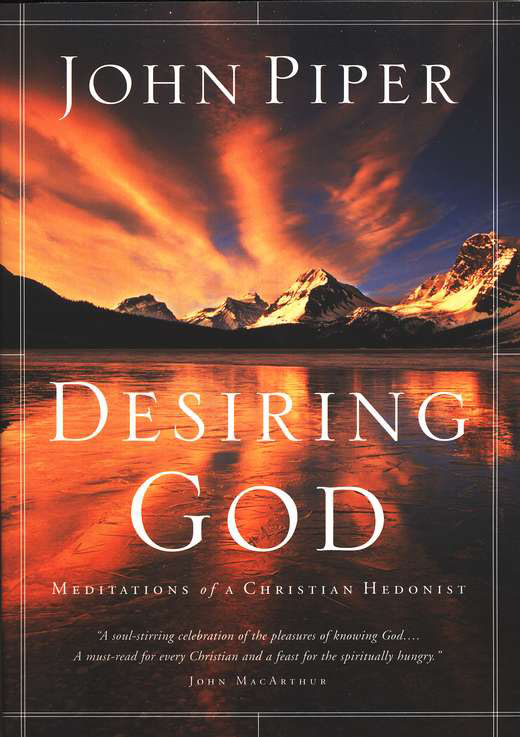
 I work for God and God's people in my Christian school and pastoral jobs.  So, it is easy for me to do Biblical things out of a sense of duty or job requirements.  That means that it is easy for me to lose sight of desiring God, enoying God, delighting in God.  I can delight in a sermon delivered, a worship service highly attended, a tense meeting conducted amiably.  The joy of knowing God is a much needed antidote to my all-too-recurring thoughts and attitudes.  John Piper's book is one I should have read long ago and will need to read repeatedly.  Thank God for John Piper who is reminding us of the fun of a Calvinistic view of God.

Worthy narrative history.
I have long owed the book The History of the Medieval World by Susan Wise Bauer a reading and a review.  Now, I am looking ahead to this year's Humanities course which is on the Medieval World.  The Medieval world is so vast and rich, so full of light (not the Dark Ages at all), so territorial and expansive, and so relevant.  I am reading this book both for my own knowledge and with the thought of adopting it as a classroom text. 


"Not a square inch of the universe where Jesus does not declare: 'Mine!'"
 There are hundreds, many thousands, of titles that deal with the topic of a Christian worldview.  The starting point for most modern thinking of developing, teaching, growing a Christian worldview comes from one man: Abraham Kuyper and his famous Stone Lectures, which became the basis for his book Lectures on Calvinism.  Kuyper has been a major force in theological thinking for Christians of many varieties.  This book, Wisdom and Wonder: Common Grace in Science and Art, has only recently been translated and published in English.  It echoes and develops the main ideas of Kuyper.  If the grocery lists of Abraham Kuyper were published in English, I would want a copy.  

Monday, July 02, 2012

In Time for the Fourth

A scholarly and conservative discussion of the Founding Documents
I must confess that I generally learn history through reading biographies.  And if not a biography, I prefer the kind of narrative history that David McCullough writes.  I want to read the kind of book whose back cover blurb's say, "Fast paced," "Like a novel," or "a page turner." 

But sometimes, we have to plod through more serious, less compelling reading.That said, I am sure you now want to run out and buy and read The Founders' Key:  The Divine and Natural Connection Between the Declaration and the Constitution and What We Risk by Losing It.  This book is published by Thomas Nelson, and I received my review copy through BookSneeze.

The author of this book is Dr. Larry Arnn, who is the president of Hillsdale College.  He received his M.A. and Ph. D. from the Claremont Graduate School.  Those credentials fairly guarantee a conservative perspective to this work.

This book accomplishes several things.  First, it answers those (like historian and author Joseph Ellis) who contend that the Declaration and the Constitution are far apart in terms of philosophy and worldview.  Second, it defends or explains some of the questionable aspects of the founders' actions (in contrast to their beliefs).  Of course, the difficult issue here is always slavery and Dr. Arnn gives a credible defense of the founders' inconsistencies on that point.  Third, it calmly warns against the ever encroaching administrative state.  I don't always mind the shrill critics (meaning, the ones I agree with in this case), but there is the place for the calm, rational look at the documents that formed our government in contrast to the current trends.

Consider this one paragraph:
Constitutionalism in the old sense seems a relic of a distant past.  Article I, section 8, of the Constitution lists in seventeen paragraphs the things about which Congress may legislate. Half of them concern national defense. The rest mainly concern the guarantee of an unimpeded national system of commerce and property rights and the ability of the federal government to operate on the territory it posseses. There is no word about education, health, retirement, welfare, or any of the hundreds or perhaps thousands of areas of policy in which the Federal government now operates.
That paragraph may not fire you up in the same way that a Reagan speech would have, but it is sound and solid. 

I think this book would be useful for a high school or college government class.  Dr. Arnn's writing covers only 123 pages and the rest of the book is generally familiar primary source material, such as the Constitution and several of the essays from the Federalist.  The subject would be useful for generating discussions with an eye to the sources and examples being brought in from current practices and issues (including last week's Supreme Court ruling on Obamacare).

Arnn says, "We cannot soon have a government that operates entirely within the confines of the Constitution."  A book like this will help us on the way to such an ideal future.

Other books that I have used and benefited from in regard to the Founding Documents and Founding Fathers:
1.  The Patriot's Handbook by George Grant.  A great collection of documents.  This book is a thorough look at the history of America through key writings, including poems, songs, and speeches.

2.  Christianity and the Constitution by John Eidsmoe.  Jam-packed full of information about the worldviews of the era of the American Revolution and of the Christian ideas of most, nearly all, of the Founding Fathers.  I use this book in my government classes.

3.  The Federalist Papers.  I like using Mary Webster's updated and revised version of the Federalist Papers. After several occasions now to teach through at least some of the essays, I have come to appreciate and stand in awe of what Hamilton and Madison (these 2 mainly) and John Jay thought about the Constitution.  And one cannot help but be awed by their knowledge of history and political science.  I really would like to have a more thorough knowledge of these 85 essays.

4.  The Anti-Federalists Papers.  While Madison, Hamilton, and Jay compiled the essays that became The Federalist Papers, there never was a unified coherent set of essays opposing the Constitution.  Collections of Anti-Federalist writings include a wide assortment of political thinkers of that time who had some worthy objections. The best known opponent was Patrick Henry.  Some of their objections helped secure the writing of the Bill of Rights.

5.  Democracy in America by Alexis deTocqueville.  This traveling Frenchman relied heavily on The Federalist Papers for his thought.  I use portions--large portions--of this book in my Humanities class.  I wish I could engage in a more thorough study of deTocqueville also.

6.  It Is Their Right:  The Declaration of Independence and What Has Followed by James Bulman.  It is has been many years since I read this, but I recall really liking it.  He does make the politically incorrect, but still compelling case for defending the 1861 secession movement from the Declaration.

7.  Defending the Declaration:  How the Bible and Christianity influenced the Writing of the Declaration  by Gary T. Amos.  Another book I read many years ago and really liked.  Before I read this book, I had a much more negative view of Jefferson's intent in the Declaration.  Jefferson was not a believer (as emphasized by Amos here and Eidsmoe in the previously listed book), but he was writing in a Christian context or culture.

8.  Worthy Company: Brief Lives of the Framers of the Constitution,   Original Intentions: On the Making and Ratification of the United States Constitution, and A Better Guide Than Reason: Studies in the American Revolution, and any other political essays by M. E. Bradford.  One of my chief regrets in life is my not having crawled on my knees to Dallas back in the 1970s and 80s to study under Dr. Bradford.

9.  This Independent Republic and The Nature of the American System by R. J. Rushdoony.  Early, formative works on my thoughts.

10.  The Radicalism of the American Revolution by Gordon S. Wood.  Read this book for a graduate class.  Began reading with lots of skepticism and was convinced of the thesis and of the author's gifts as a historian.

But to weave this back to where we began, I really have enjoyed the biographies of the Founding Fathers more than the analytical works on their accomplishments.